Tips & Strategy
How to Get Better at One-Tap Games

A one-tap game gives you nothing to hide behind. There is one input and the outcome is entirely down to how you use it, which means improvement comes from a small number of specific adjustments rather than from general practice.
1. Calibrate against the meter, not against feel
In a charge game, a visible meter shows exactly how much power you have accumulated. Most players ignore it and try to develop a feel for the press. That works eventually and is much slower than the alternative.
Spend your first two runs watching the meter instead of the gap. Learn what a quarter, a half and three-quarters look like as distances travelled. Once those three lengths are in your hands, almost every gap in the game is one of them or something between two, and you are choosing rather than guessing.
2. Err short rather than long
Platforms have a far edge as well as a near one, and overshooting is exactly as fatal as undershooting. But the two failures are not equally recoverable in practice.
Landing on the front edge of a platform still counts, and it sets up a slightly longer next jump that you can see coming and plan for. Overshooting sends you past the platform entirely with nothing to do about it. When in doubt, under-commit.
3. Use the collectible as a rangefinder
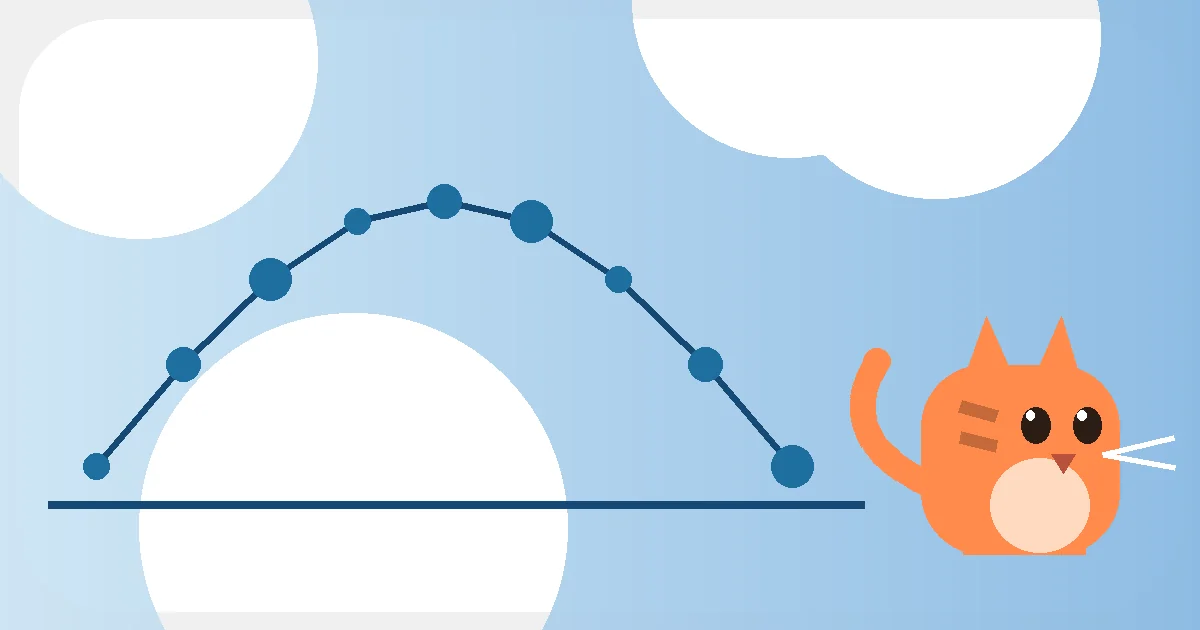
Coins in a one-tap game are usually placed on the arc of a correctly judged jump. That makes them a measuring instrument: find the coin between you and the next platform, and aim to pass through it rather than over it.
This is more reliable than judging the far edge of a platform, because a point in mid-air is easier to aim at than an edge you are trying to land just past.
4. Do not speed up after a good jump
This is the single most common way a one-tap run ends. A perfect landing feels good and produces a small surge of confidence, which translates into a faster, less considered press on the next gap.
There is no reward for pressing quickly. In a charge game the cat waits on the block indefinitely - the clock is entirely in your head. After a satisfying jump, deliberately pause and look at what is next.
5. Respect two big gaps in a row
Single large gaps are rarely what ends a run. Two consecutive large gaps are, because the second arrives while you are still congratulating yourself on the first. Treat a maximum-length jump as a signal to slow down rather than as evidence that you are on a roll.
A drill that works
- Run one: watch only the meterIgnore your score entirely. The aim is to learn what three press lengths produce.
- Run two: aim at the coinsTry to pass through every coin rather than collecting as many as possible. It is the same thing done deliberately.
- Run three: deliberately land shortAim for the near edge of every platform. You will find it works more often than you expect, and it recalibrates your instinct away from overshooting.
- Run four: play normallyMost players find their best score of the session here, having spent three runs on technique rather than on trying.
Key Takeaways
- Learn three specific press lengths against the visible meter rather than developing a vague feel.
- Err short: a near-edge landing counts and is recoverable, an overshoot is not.
- Aim to pass through the coin rather than over it - it marks the correct arc.
- Never speed up after a good jump; nothing in a charge game rewards a fast press.
- Two maximum-length gaps in a row end more runs than any single obstacle.
Frequently Asked Questions
Does holding longer always jump further?
Up to the maximum. Once the meter is full, holding longer changes nothing - the jump fires at full power when you release.
Why do I keep overshooting?
Usually because full-power presses feel safer. They are not: overshooting misses the platform entirely, while a short jump can still catch the near edge.
Is there any time pressure on the press?
In a charge game, none. The cat waits as long as you like. Any urgency you feel is invented.
What is a perfect landing worth?
Bonus points and a distinct sound, which is useful feedback on your accuracy. It is not worth taking a risk for.
Do one-tap games get harder?
The range of gap widths widens as the run goes on, so you can no longer rely on a single default press length. The maximum stays inside what a full jump clears.