Tips & Strategy
Cat Platform Game Tips

Platformers do not usually punish slow thinking, which means most of the improvement available comes from thinking more rather than reacting faster. These are the habits that make the biggest difference.
Calibrate on a safe jump
Find one gap you can cross without risk and jump it ten times with different hold lengths. Try a tap, a half hold and a full hold. You are learning what each produces in height and distance, and that knowledge transfers to every other jump in the game.
It takes about a minute and it replaces a great deal of guesswork. Most players never do it, which is why most players jump at full power all the time and overshoot narrow platforms.
Stop before tight landings
A running jump travels further and is considerably harder to place. On a narrow platform, come to a complete stop at the edge and jump from standing - the arc is shorter and much more predictable, and the platform is always wide enough for that approach.
Most failed landings in platformers are overshoots rather than undershoots, and almost all of them are running jumps that did not need to be.
Choose the landing before you press
Name the exact spot you intend to land on before you jump. It sounds artificial and becomes automatic within a few minutes. What it does is force the decision to happen before the press rather than during the flight, which is when it cannot usefully be made.
Look at the landing, not the cat
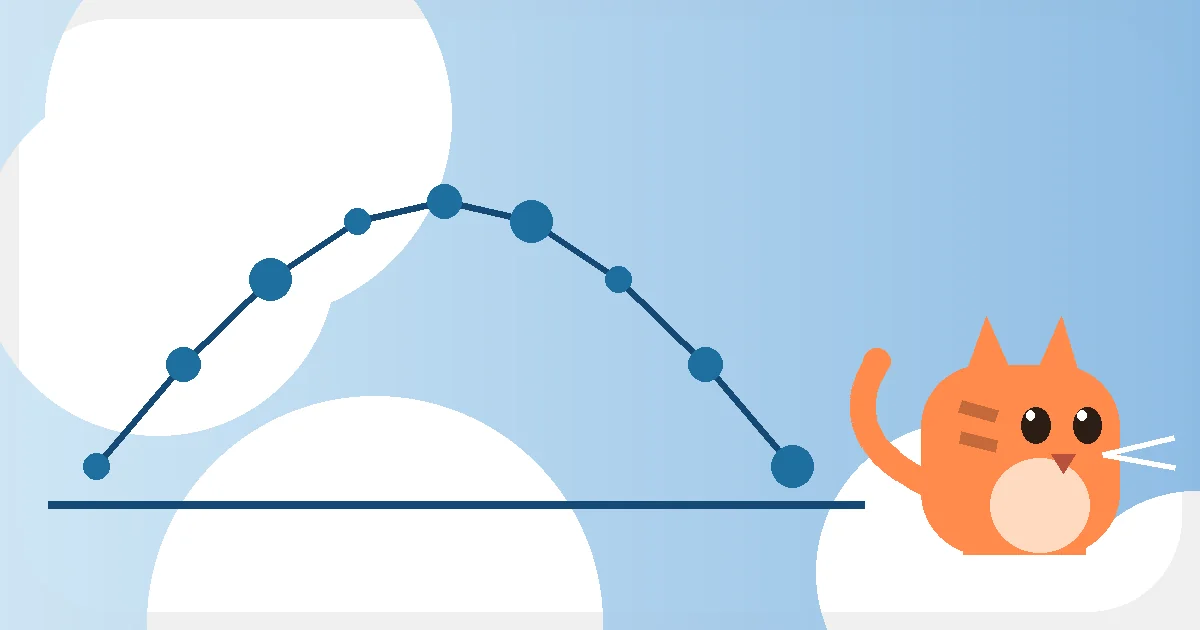
Once you are airborne, the cat is following a parabola you already set - watching it tells you nothing you can act on. Watching the platform tells you whether you are going to reach it while there is still time to react.
Trust the invisible help
Well-made platformers quietly assist you. A jump pressed a fraction after running off a ledge still registers - that is coyote time. A jump pressed just before landing fires the instant you touch down - that is input buffering. Both are standard practice and both are invisible when they work.
Knowing they exist matters because it tells you that a jump which felt marginally late probably still worked, so the thing to fix is usually not your timing but your positioning.
Read gaps in a fixed order
When a gap looks impossible in a hand-designed level, work through three questions in order and one of them almost always answers it.
- Can a maximum jump clear it from a running start? If the game has no special moves, the answer is usually yes - designers rarely place a gap beyond the character's range.
- Is there something floating in the gap? A collectible in mid-air marks the intended route, and in a game with a special move it often marks where to use it.
- Is the route somewhere else entirely? Look up and look back. Hand-designed levels usually have a higher or lower path you have not noticed.
Take every checkpoint
Skipping a checkpoint to save four seconds is the most reliable way to lose ninety. They are placed immediately before the difficult sections precisely because that is where you will need them, and the detour to touch one is always short.
In automatic-jump climbers, tap rather than hold
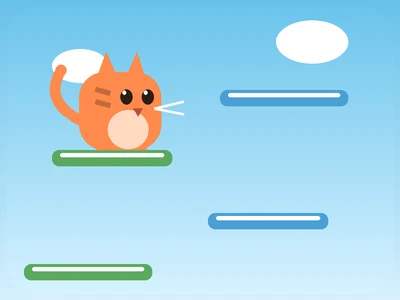
Games where the cat bounces on its own need a different approach. Holding a direction sends you sailing past narrow platforms; short taps let you creep sideways and land accurately. Switching from holding to tapping raises most players' scores noticeably on its own.
And aim one platform beyond the one you are approaching. Because the bounce is automatic there is no pause in which to decide later - the decision has to already exist when you land.
Key Takeaways
- Spend a minute calibrating tap, half-hold and full-hold jumps on a safe gap.
- Stop at the edge for tight landings; running jumps overshoot.
- Name your landing spot before pressing, and watch the platform rather than the cat.
- Coyote time and input buffering are real - a jump that felt late probably registered.
- In automatic-jump climbers, tap the direction keys and plan one platform ahead.
Frequently Asked Questions
Why do I keep overshooting platforms?
Almost always a running jump where a standing one would do. Stop at the edge for narrow landings.
Should I always jump at full power?
No. Full-power jumps are harder to place and frequently overshoot. Learn what a half-hold produces and use it for medium gaps.
What is coyote time?
A short grace window after running off a ledge during which a jump still counts as a ground jump. It is standard in well-built platformers and you can rely on it.
How do I know if a gap is meant to be crossed?
If a collectible floats in it, yes. If nothing marks it and a maximum jump will not reach, the route is somewhere else.
Is it worth replaying a level for the collectibles?
It is the intended second challenge. Collecting everything usually needs a different route from the fast one, which is what makes the replay worthwhile.