Game Mechanics
Cat Jumping Games: Mechanics and Strategies
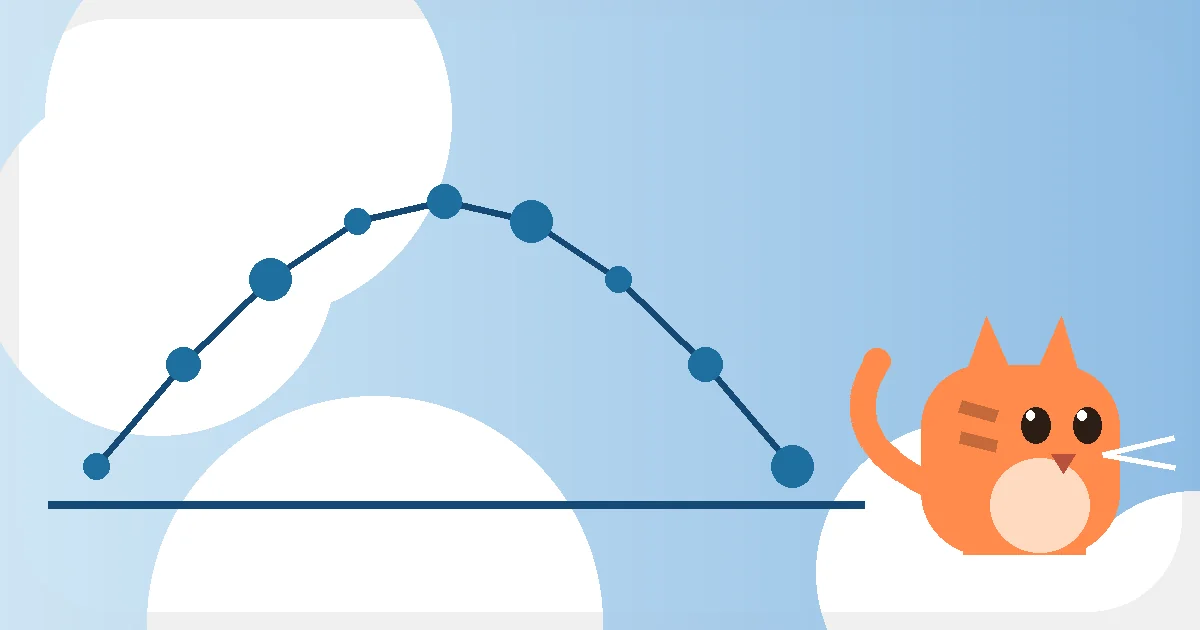
A jump has three parts: the launch, the arc and the landing. Almost every player who struggles with platform games is practising the first one, which is the easy part. This guide explains how jumping is actually implemented, what good games do invisibly to help you, and how to work on the part that matters.
What a jump is, mechanically
A jump is two numbers and one rule. The numbers are vertical velocity and gravity; the rule is that gravity is added to velocity every frame, and velocity is added to position every frame.
When you press jump, the game sets the cat's vertical velocity to a large negative value - negative because screen coordinates increase downward. Each frame after that, gravity adds a positive amount back. The velocity shrinks, reaches zero at the top of the arc, then grows positive as the cat falls. When the cat's feet reach a surface, velocity is zeroed and the position is snapped to the surface.
That is the entire mechanism, and it produces a parabola automatically. Nobody writes a parabola equation - it emerges from repeatedly adding a constant. The height of the arc depends on the launch velocity, and the length depends on how fast the cat is travelling horizontally while airborne.
The three jump models
Which model a game uses determines what skill it is testing, and therefore what you should practise.
Fixed jump
One press, one identical jump every time. You control the moment and nothing else. This is used in Cat Dash and, in an unusual form, in Kitty Jump, where the jump is not only fixed but automatic.
A fixed jump is the most learnable model because it is completely consistent. Once you know the arc, you know it forever. It is also the most demanding on timing, because timing is the only input you have.
Variable-height jump
Holding the button longer produces a higher jump. The implementation is simple and slightly counter-intuitive: the game applies the full launch velocity on press, then, if you release early, it cuts the upward velocity short. You are not adding height by holding - you are declining to remove it.
This is what Midnight Cat and Jungle Kitty use. Because horizontal speed is constant while airborne, a higher jump is also a longer one, so a single button controls both height and distance.
Charged jump
You hold before jumping rather than during it, and the accumulated charge sets the power. Timing is irrelevant - the cat waits. This is Cat Hop, and it is the purest test of distance judgement because nothing else is being measured.
The invisible helpers
Good platformers cheat in your favour, consistently and invisibly. These techniques are standard practice and are the difference between a game that feels responsive and one that feels stiff.
- Coyote time
- A short window - typically around a tenth of a second - after running off a ledge during which a jump press still registers as a ground jump. Named after the cartoon coyote who hangs in the air before falling. It exists because players consistently press jump a few frames after leaving a platform, and without it those attempts fail for no reason the player can perceive.
- Input buffering
- A jump pressed slightly before landing is remembered and fires the instant the cat touches down. Without it, a press during the last few frames of a fall is simply discarded, which feels like the game ignoring you.
- Shrunken collision boxes
- The cat's collision box is smaller than its drawn shape, excluding ears, tail and whiskers. This means near misses are misses, which is what players expect visually even though the pixels overlapped.
- Landing snap
- When a jump ends slightly below a platform's surface, the cat is snapped up to it rather than being counted as a collision with the platform's side. This prevents the frustrating case of clipping the edge of a platform you clearly reached.
If you have ever made a jump you were certain you had missed, one of these was the reason. They are covered in more depth in how jump mechanics work.
Strategy: practise landings, not launches
The launch is a button press. The landing requires you to have chosen a destination before you left the ground, which is a decision made under time pressure with incomplete information. That is where the difficulty actually lives.
- Name the landing spot before pressingPick the exact point you intend to land on. The habit feels artificial for about five minutes and then becomes automatic. It forces the decision to happen before the jump rather than during it, which is the whole problem being solved.
- Stop before tight jumpsA running jump travels further and is harder to place. Where a platform is narrow, come to a stop at the edge and jump from standing. The arc is shorter and much more predictable.
- Calibrate on a safe gapFind one jump you can repeat without risk and do it ten times with different hold lengths. Learning what a quarter-hold, half-hold and full-hold actually produce transfers to every other jump in the game and takes about a minute.
- Look at the landing, not the catWatching the cat tells you nothing - it follows a parabola you already set. Watching the platform tells you whether you are going to reach it while there is still time to react.
- Jump higher when uncertainIn variable-height games, overshooting usually means landing further along a safe surface. Undershooting means falling. When you cannot judge a gap, hold longer.
Strategy for automatic-jump climbers
Kitty Jump removes the jump button entirely, which changes the strategy completely. You cannot wait for a good moment, so every decision has to already exist when the bounce happens.
- Aim one platform beyond the one you are approaching. While rising toward a platform, choose what comes after it. There is no pause in which to think later.
- Tap rather than hold. Holding a direction sends the cat past narrow platforms. Short taps let you creep sideways and land accurately, and this change alone lifts most players' scores noticeably.
- Stay near the centre. The middle of the screen keeps the most options within reach and keeps both screen-wrap directions available.
- Treat springs as a decision. A spring gains height fast but surrenders control for two seconds. Take it when the space above is dense with platforms; refuse it when the space above is empty.
Reading a gap you have not seen before
In a hand-designed platformer, a gap that looks marginal is usually intentional, and there are three possible answers. Working through them in order will solve most sections.
- Can a maximum jump clear it from a running start? If the game has no special moves, the answer is almost always yes - designers rarely place a gap that requires more than the cat's maximum.
- Is there something in the gap? A collectible floating in mid-air is the designer telling you the route passes through that point. In Magic Cat Adventure, a crystal in open air means the crossing needs a dash refresh at exactly that spot.
- Is the route somewhere else? If neither of the above works, the gap is not the way. Look up and look back - hand-designed levels usually have a higher or lower path you have not noticed.
Key Takeaways
- A jump is gravity added to velocity each frame; the parabola emerges rather than being calculated.
- Fixed, variable-height and charged jumps test different skills - timing, hold length, and distance judgement respectively.
- Coyote time, input buffering and shrunken collision boxes make good platformers feel fair, and all of them are invisible.
- The landing is the hard part of a jump. Choosing a target before pressing is the single most effective habit to build.
- In automatic-jump climbers, tap rather than hold, aim one platform ahead, and hold the centre of the screen.
Frequently Asked Questions
Why can I jump higher by holding the button?
The game applies the full jump velocity on press and cuts it short if you release early. Holding does not add height - it declines to remove it. This is why the technique only works during the rising part of a jump.
What is coyote time and can I rely on it?
A grace window of roughly a tenth of a second after leaving a ledge during which a jump still registers. It is deliberately there and you can rely on it, though it is short enough that it rescues genuine near-misses rather than careless play.
Why does my cat miss platforms it looks like it reached?
Usually because you were still moving horizontally past the landing point. Try stopping at the edge before jumping - a standing jump has a much more predictable arc.
Should I run or walk in a platformer?
Run across open ground, stop for precision. Running jumps travel further but are harder to place, and most failed landings are overshoots rather than undershoots.
Why is there no double jump in most platformers here?
Because a double jump makes level geometry meaningless - any gap becomes reachable, so no gap is a real decision. Cat Dash has one specifically as a recovery move for a mistimed jump, not as part of normal movement.
Is jump height the same as jump distance?
In a game with constant horizontal speed, yes - a higher jump stays airborne longer and therefore travels further. That is why one button can control both in games like Midnight Cat.