Game Mechanics
How Game Speed Changes Difficulty
When a runner speeds up, nothing about the crates changes. They are the same size, the same shape, and need the same jump. What changes is the amount of time between seeing one and needing to act, and that single quantity accounts for almost all of the difficulty you feel.
The reaction window
The window is a division: the distance an obstacle travels before it reaches you, divided by how fast it is travelling. On a 900-pixel canvas with the cat sitting 200 pixels from the left, an obstacle entering at the right edge has 700 pixels to cover.
| Speed | Window | What that means |
|---|---|---|
| 330 px/s | 2.1 seconds | Time to see it, think, and act deliberately |
| 450 px/s | 1.6 seconds | Comfortable; you can still consider options |
| 600 px/s | 1.2 seconds | Hesitation is now fatal |
| 760 px/s | 0.9 seconds | Reaction alone is no longer enough |
Doubling the speed halves the window. That is the whole mechanism, and it is why a game can become genuinely demanding without adding a single new element.
Why reaction stops working
Responding to a visual signal takes a meaningful fraction of a second: you have to see it, recognise what it is, decide, and then move. At two seconds of window, that process consumes a modest share. At under a second, it consumes most of it, leaving almost no margin for being slightly wrong.
This is why players plateau at a particular score. It is usually not a skill ceiling in the ordinary sense - it is the point at which the window drops past what pure reaction can cover, and getting further requires a different approach rather than a faster one.
What replaces reaction
Anticipation. Instead of responding to the obstacle you can see, you respond to what you know is coming - from the spacing rules, from the pattern you recognised, from the rhythm the game has settled into.
- Spacing knowledge
- Runners enforce a minimum gap derived from the current speed. Once you have internalised that rhythm, the next obstacle's arrival is predictable within a narrow range.
- Pattern recognition
- In a pattern-based runner, the first obstacle of a sequence identifies the whole sequence. You are then executing from memory rather than reacting, which is much faster.
- Motor programmes
- A well-drilled jump becomes a single unit rather than a chain of decisions. This is why practising in the easy part of a run transfers to the hard part.
Why your own speed matters too
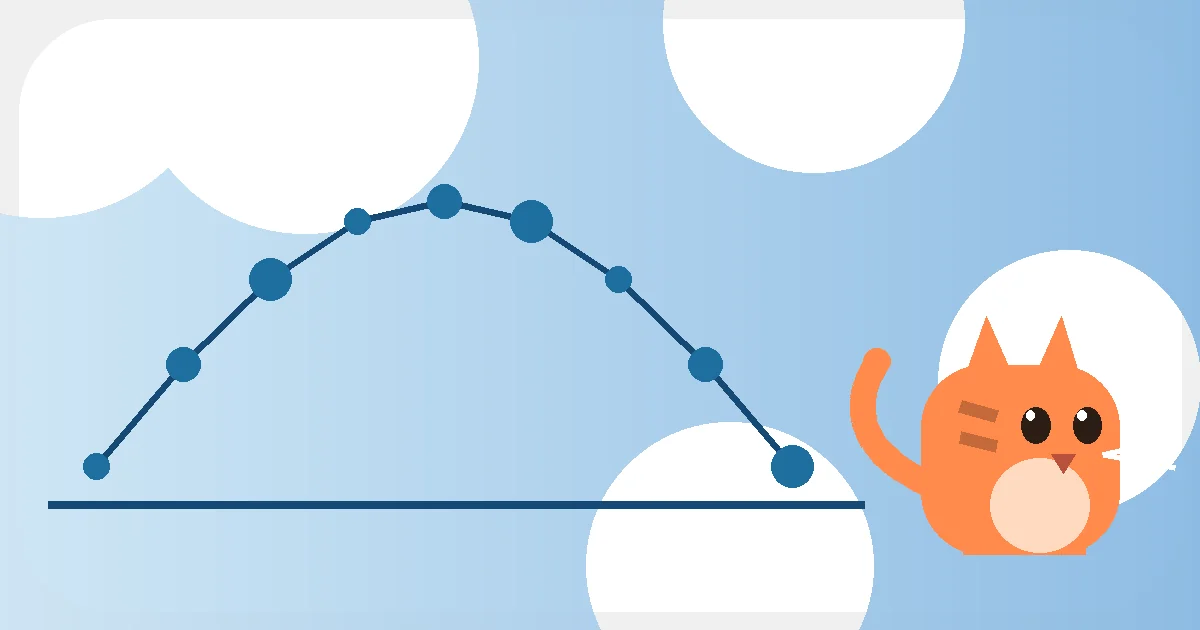
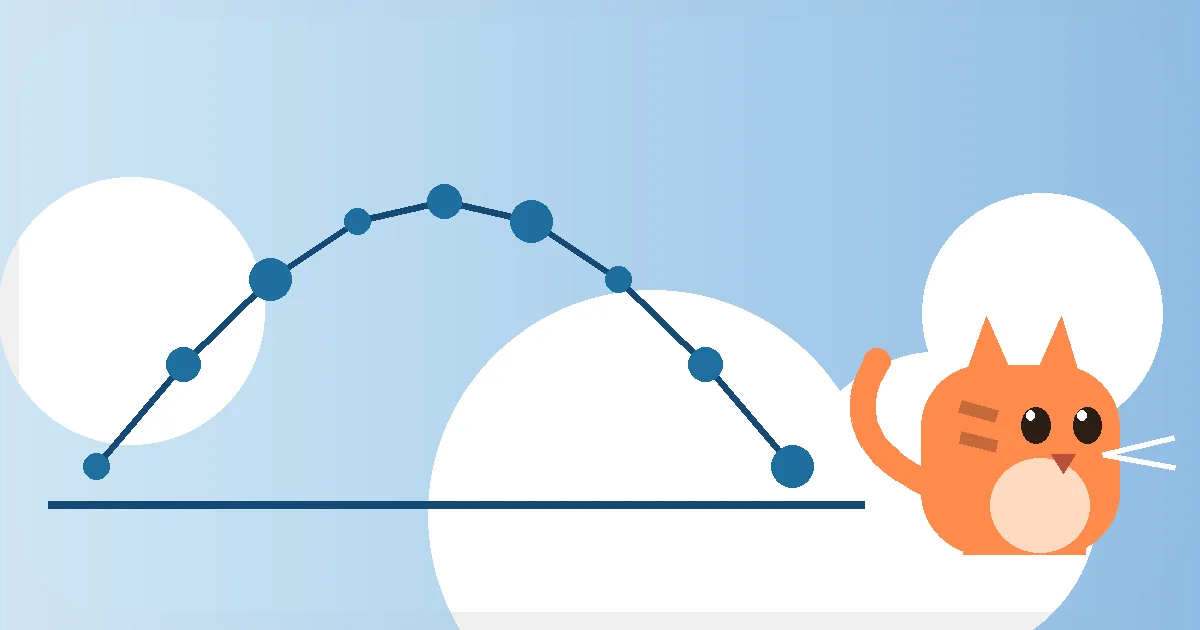
Speed does not only shrink the window. In games with variable jumps it also changes what a jump does: higher scroll speed means the cat covers more ground while airborne, so the same press clears a wider gap. Players who learned a gap at one speed often overshoot it later.
This is why calibration is not a one-off. In a game whose speed climbs significantly, the press that was correct at the start is not the press that is correct two minutes in.
Practising at the right speed
- Drill where it is cheapA technique learned under maximum pressure transfers badly. Work on a specific habit during the gentle opening, where failing costs nothing.
- Identify your transition pointNote the score at which your runs usually end. That is where the window crossed your reaction threshold, and it is the specific thing to work on.
- Change one thingEye position, press timing, or risk appetite. Changing all three at once tells you nothing about which helped.
- Use the pausePausing to look at a situation you keep failing is not cheating, and it is the fastest way to convert a reaction problem into a knowledge problem.
Key Takeaways
- Speed changes no obstacle - it divides your available time, and the window is distance divided by speed.
- Doubling speed halves the reaction window; past about a second, pure reaction stops being sufficient.
- Skilled play at high speed is anticipation from spacing and patterns, not faster reflexes.
- In variable-jump games, higher speed also lengthens your jumps, so calibration has to be revisited.
- Drill techniques in the easy part of a run; they transfer to the hard part, and the reverse does not hold.
Frequently Asked Questions
Can I train my reaction time?
Only marginally. What improves substantially is where you look, how early you decide, and how much you recognise rather than process. Those are the levers worth pulling.
Why do I always fail at the same score?
That is usually where the reaction window drops past your threshold. Getting further means shifting from reacting to anticipating rather than reacting faster.
Do obstacles get closer together as speed rises?
In pixels yes, in seconds no. Minimum spacing is calculated from the live speed so the time available stays above a floor.
Does a higher refresh rate display help?
Marginally, by reducing the delay before you see a change. It is a much smaller effect than where you are looking.
Why does a game feel easier after a break?
Fatigue degrades timing and attention, and it does not recover within a session. A short break genuinely restores performance.